
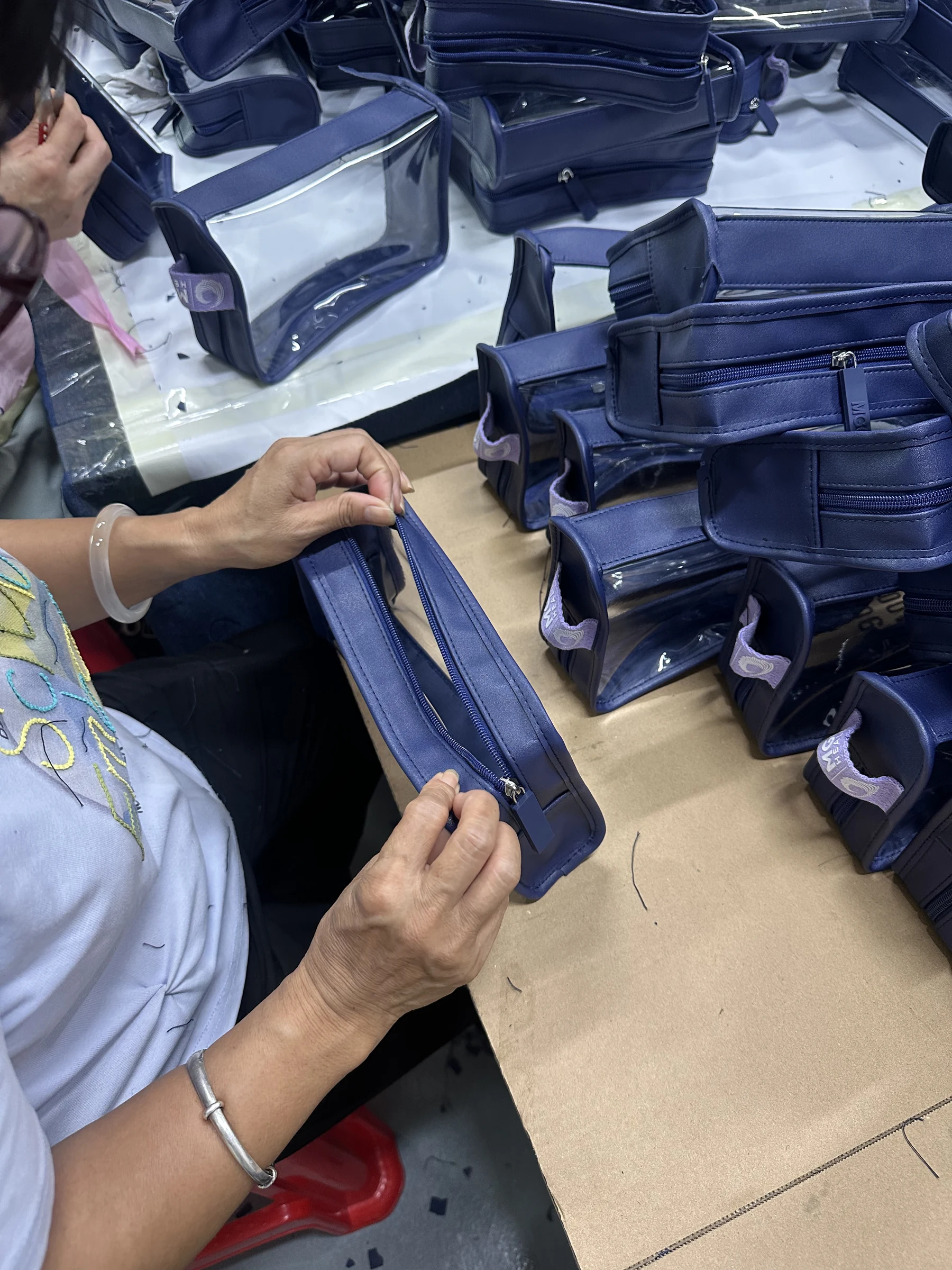
Create one approved quality reference
The quality plan should point to an approved sample and written specification. Include measurements and tolerances, material references, artwork, logo position, stitch and reinforcement details, hardware, labels, packing and any buyer-specific test requirements.
Inspect before defects become expensive
Incoming materials can be checked for color, visible defects and specification. Cutting and first-piece reviews help identify dimension or assembly errors before they repeat. In-line checks focus on construction while corrections are still practical.
Test finished function, not appearance alone
Open and close zippers, test buckles and adjusters, review compartments, check handle and strap attachment, compare logo placement and inspect the inside as well as the outside. Product-specific checks should reflect the intended load and use.
Define release and corrective-action rules
Agree who records findings, how affected units are separated, what rework is acceptable and who authorizes shipment. If third-party inspection is required, confirm the sampling plan, defect classification and booking lead time before production finishes.
Agree category-specific backpack and cooler bag checks
For custom laptop backpacks, compare the approved device fit, sleeve clearance, padding, compartment access, logo position and handle or strap attachments with the sample reference. For cooler bags, record lining and seam workmanship, closure, capacity and cleaning requirements. If insulation or leakage testing is required, agree the sample construction, contents, starting temperature, ambient conditions, test duration and acceptance criteria before approval. Sewn or welded construction should be confirmed for the proposed product, not assumed from a photograph.
Match the buying brief to the bag category
For Business Backpacks, specify device dimensions, compartments, padding and carrying needs. For Duffel Bags, define capacity, handle and strap attachment, and base reinforcement before sample review.
Compare Cooler Bags for larger insulated programs with Lunch Bags for individual meal carry. State the contents, dimensions, lining, cleaning needs and any insulation test requirement; a photograph alone does not establish cooling performance.
For Tote Bags, confirm fabric weight, handle drop, intended load and artwork area. Use the RFQ-to-shipment procurement guide to keep category, quantity, materials and approvals in one comparable supplier brief.
Planning a branded bulk order? Review custom business backpacks with logo for corporate and private-label programs, or custom cooler bags with logo for insulated promotional carry. Hongzhao manufactures in Shenzhen; US buyers should state the destination, quantity per style and color, and shipping scope in the brief.
| Stage | Typical checks | Buyer evidence |
|---|---|---|
| Incoming | Material, color lot, components and visible defects | Approved swatches and purchase specification |
| In-process | Dimensions, seams, reinforcement and logo setup | First-piece or line-check record |
| Finished | Appearance, function, measurements and branding | Inspection findings and corrected units |
| Packing | Quantity, labels, protection and carton marks | Packing confirmation and shipment release |