Field-test result at a glance
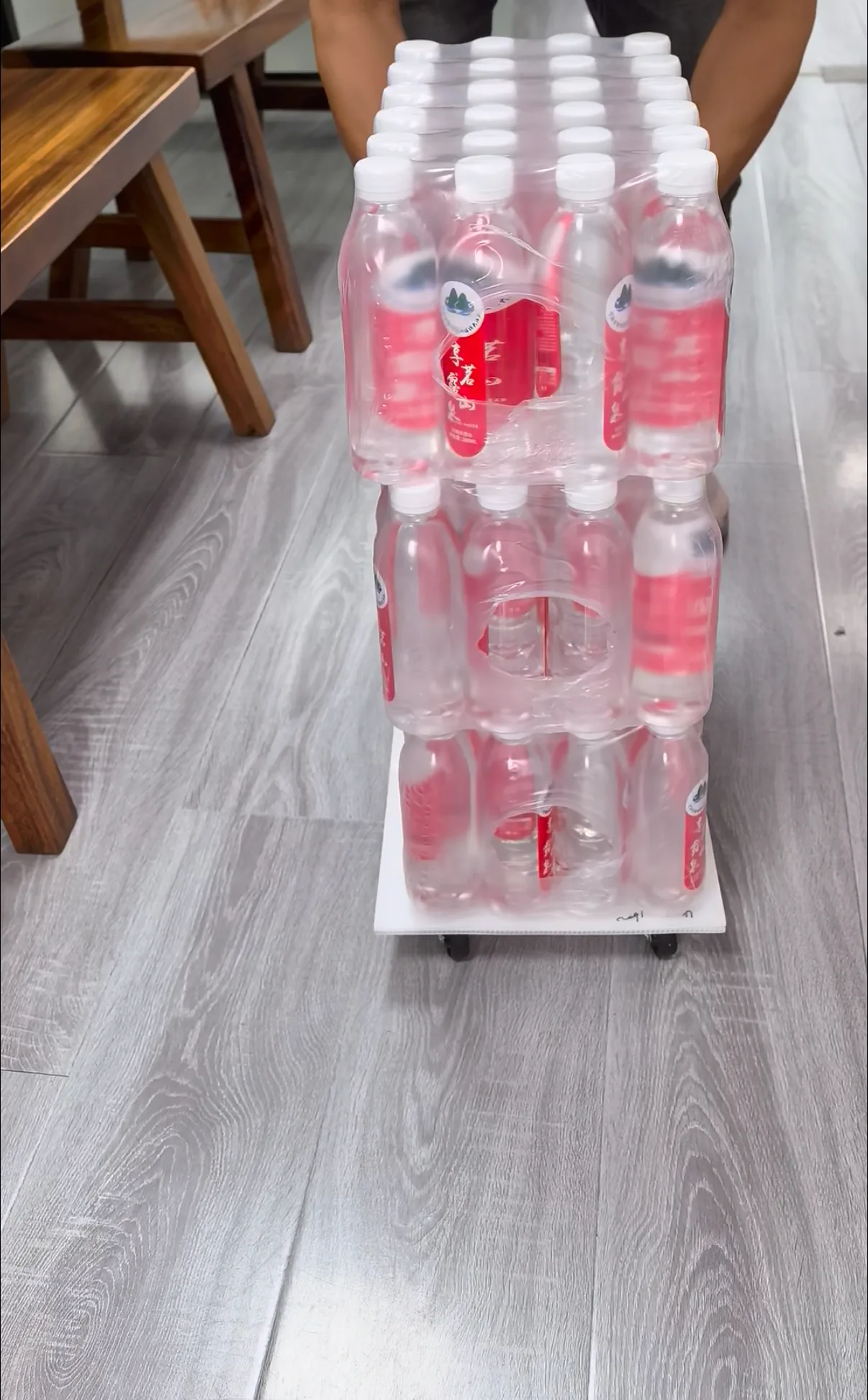
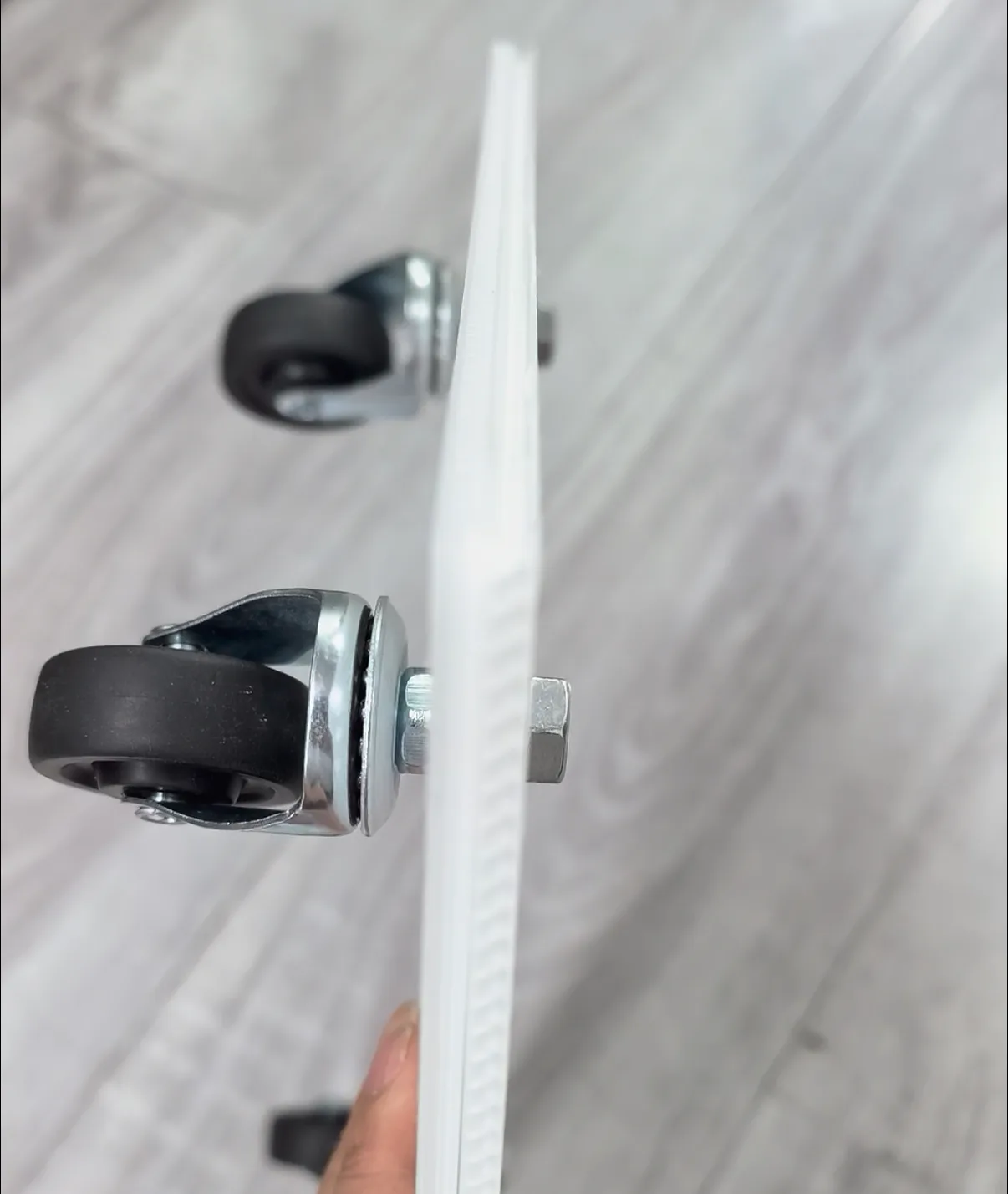
The 28 kg (about 62 lb) load represented three cases of bottled water. After indoor and outdoor movement, the owner observed that the wheeled bag still rolled smoothly and that the bottom support panel had no visible breakage. The post-test wheel close-up gives buyers a direct view of the component. The result is most useful as a real sample demonstration: it shows what to ask a supplier to repeat with your contents and route. It is not a universal maximum-load rating for every future unit.
What a buyer can take from the trial
First, compare the loaded bag's usable space with the items in your campaign. Second, look at the wheel and bottom panel after movement, not just the logo on the empty bag. Third, request the same check on the approved production sample if your load or route differs. The four-column table above separates the real test setup, the observed result and the next purchasing decision so your marketing and procurement teams can use the evidence together.
One clear boundary for product claims
A successful 62 lb (28 kg) field movement does not automatically make 62 lb the product's advertised safe working load. If a printed capacity or long-term wheel-life claim matters to your program, agree on a repeatable method and acceptance criteria for the exact construction you order. This distinction protects buyers without diminishing what the actual trial showed.
Identify the product before discussing capacity
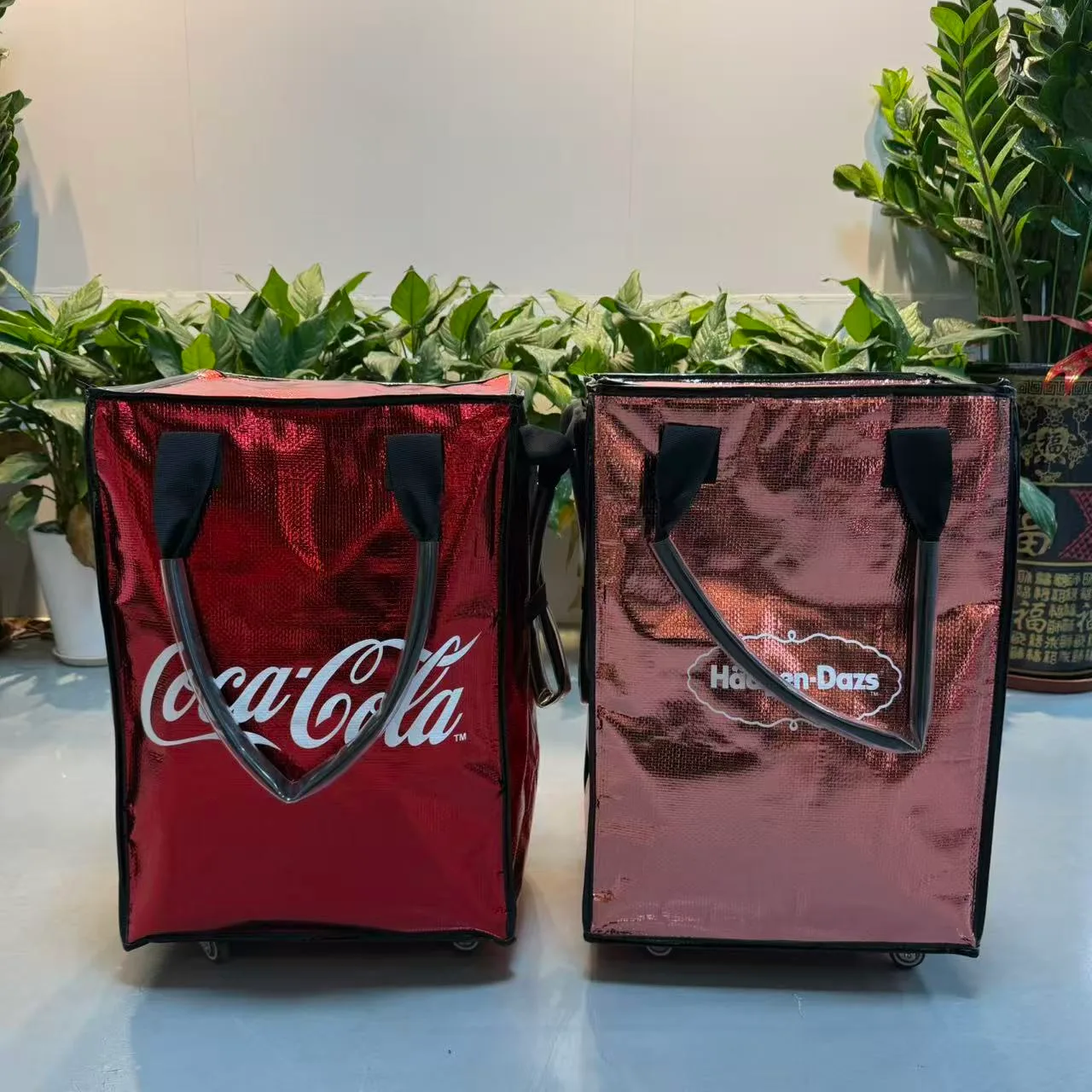
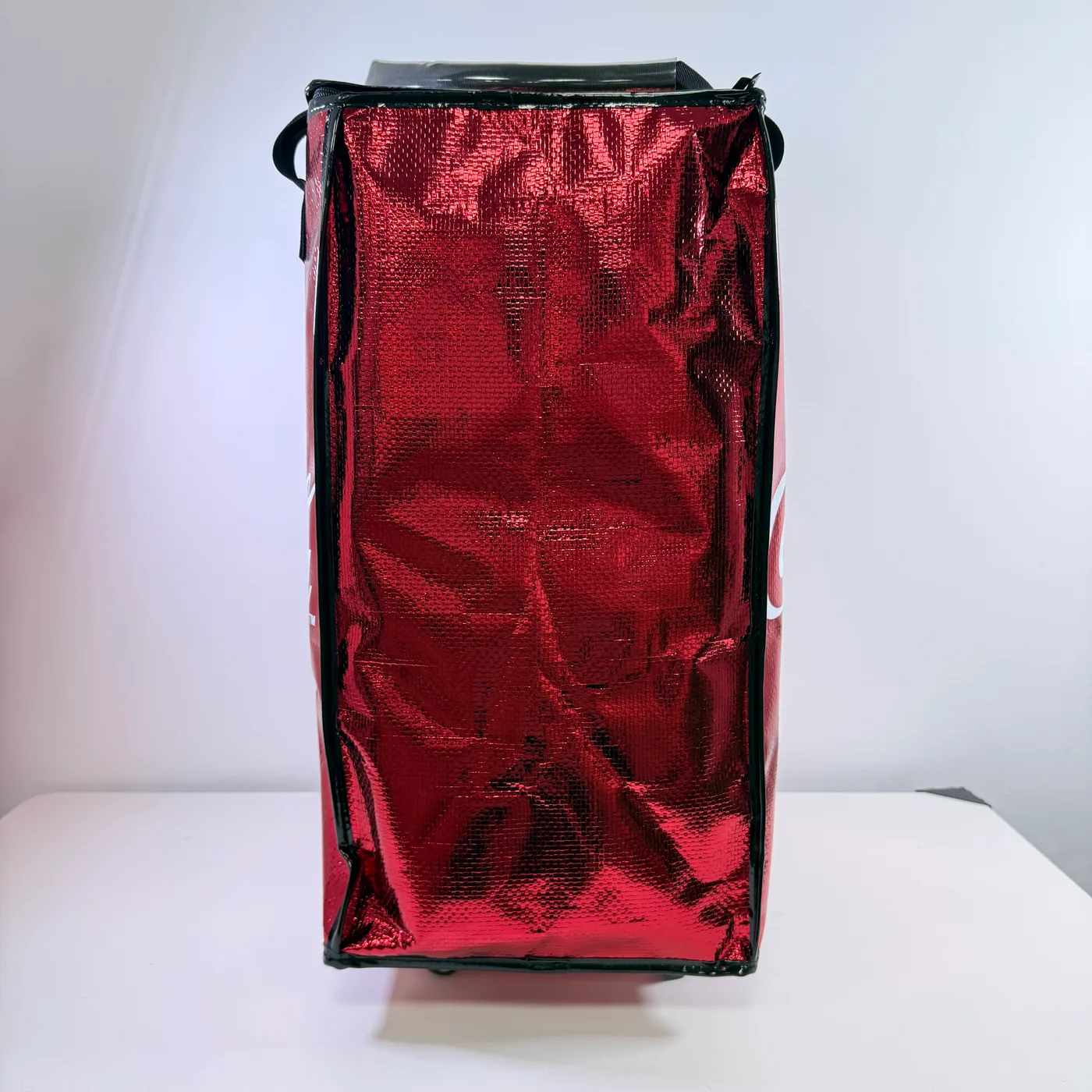
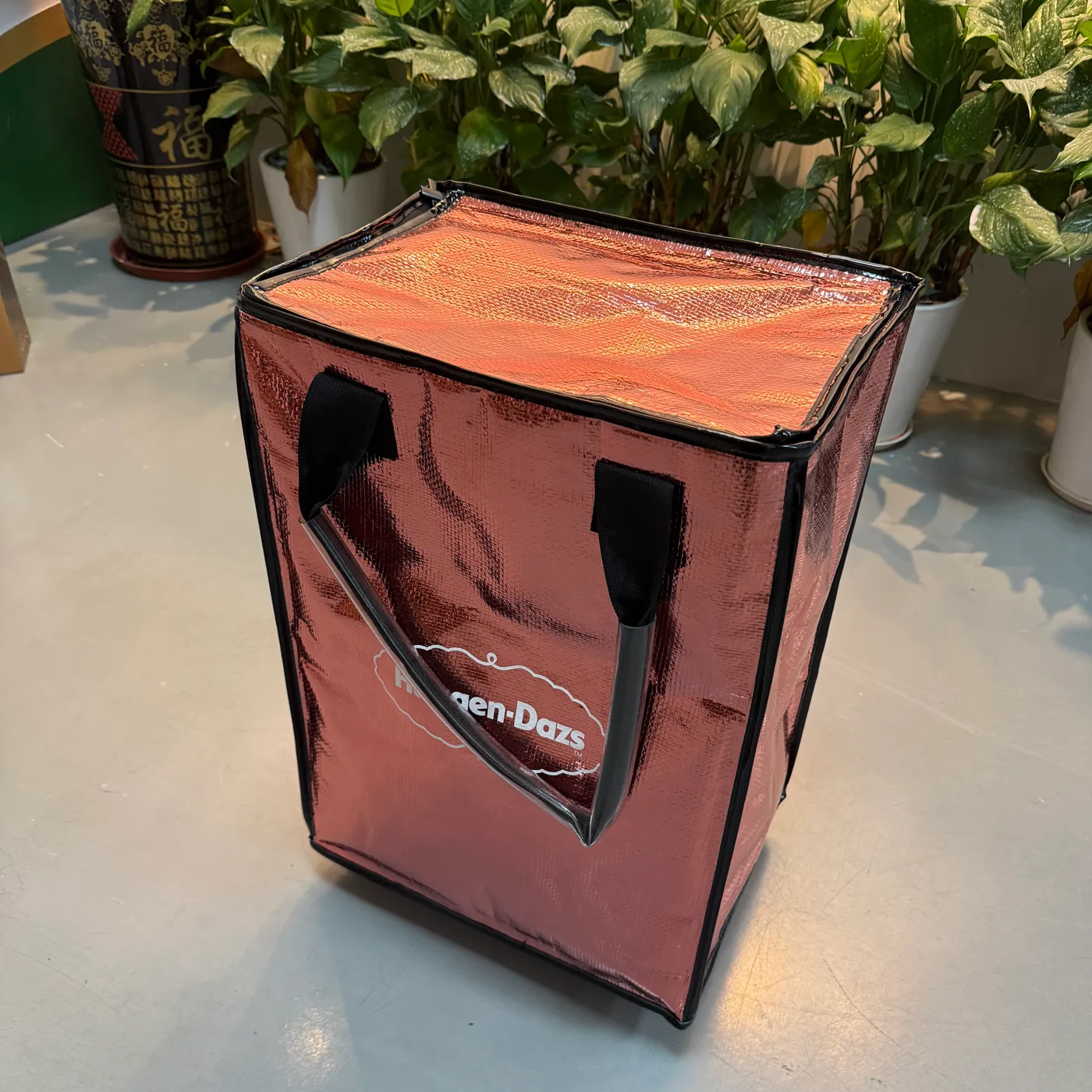
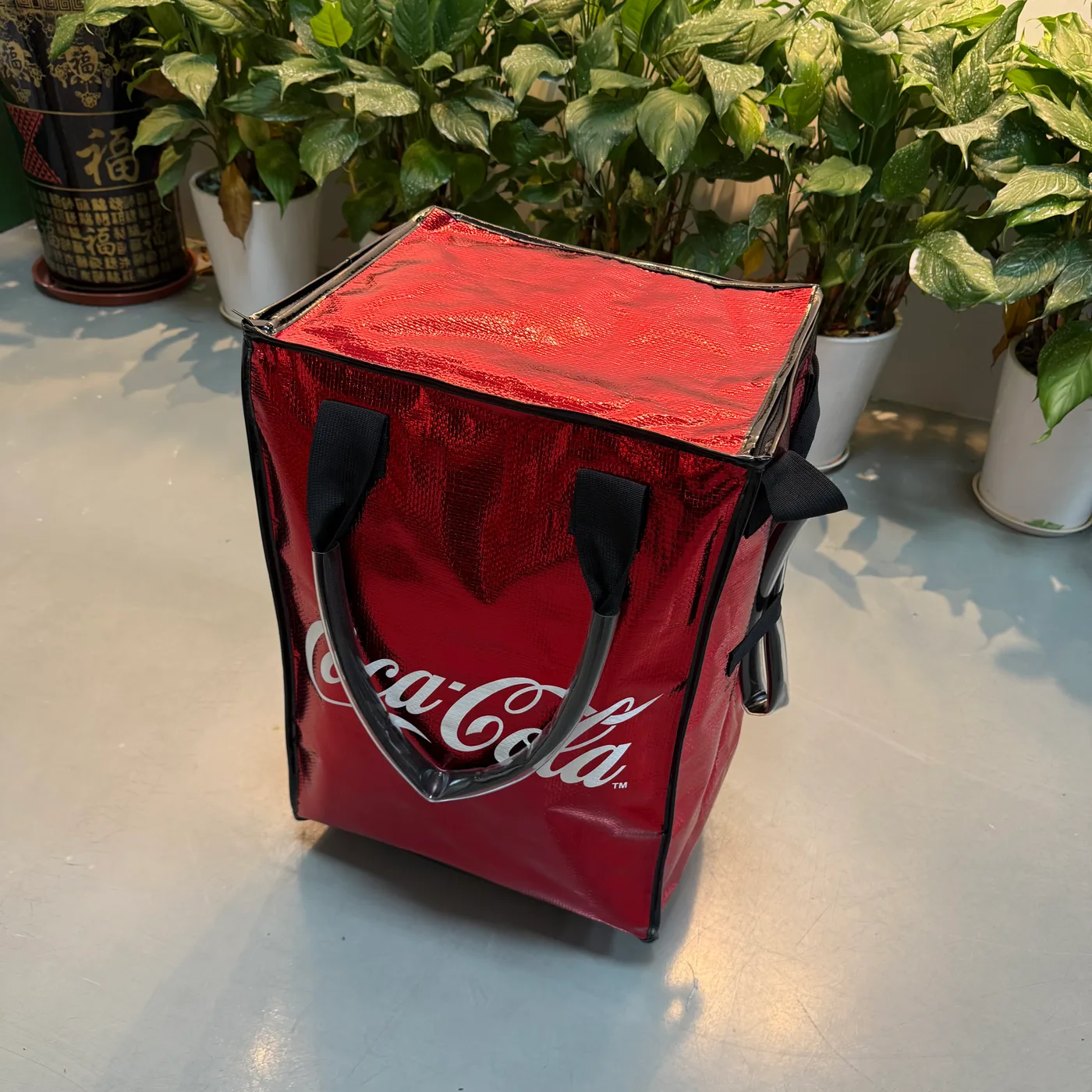
The pictured object is a soft shopping bag on a low wheeled base with carry or pull handles. It should not be confused with an airport suitcase, a telescopic-handle trolley, a supermarket cart, an insulated cooler or a parent-company outdoor bag. Those nearby labels lead to different buyer expectations. Here the proposed use is a branded shopping carrier that can be loaded and moved across an ordinary recipient route. The buyer's first task is to make sure everyone is referring to the same physical construction and the same way of moving it, not merely to the same marketing name.
Write the recipient action, not just the product label
A store loyalty recipient may wheel groceries from checkout to a nearby car, while an event attendee may move printed materials across a venue. Those are planning examples, not documented uses of these two branded samples. The buyer should specify whether the user will pull, push, lift or store the bag; whether stairs, thresholds or curb edges are part of the normal route; whether the bag must stand while being packed; and whether the handles are meant for occasional lifting under load. A route that requires repeated stair carries imposes different demands from a mostly level path. Ask the supplier to confirm which actions the proposed design is intended to support.
Do not infer material or thermal performance from appearance
The metallic-looking surface in a photograph is not proof of a particular polymer, foil laminate, waterproof coating or insulation performance. Likewise, a visible brand mark does not establish its printing method, rub resistance or licensed artwork status. If the program needs temperature control, cleanability, food-contact suitability or a specified recycled content, those become separate specifications with separate evidence. This trial examined carrying and rolling behavior as reported by the owner. It did not measure temperature, food-contact compliance, material composition or environmental claims, so this guide makes none of those promises.
Treat the three water cases as a test configuration
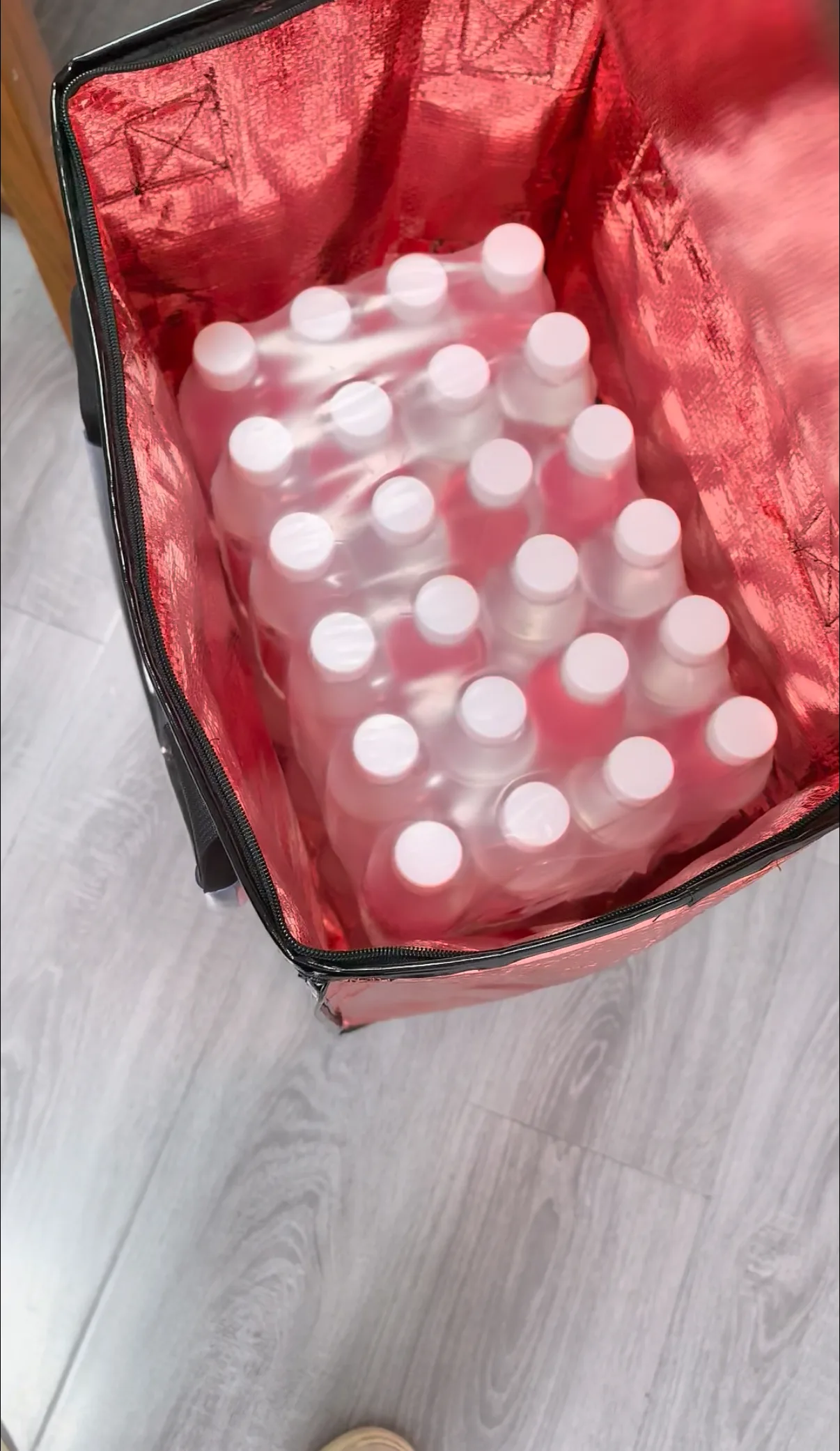
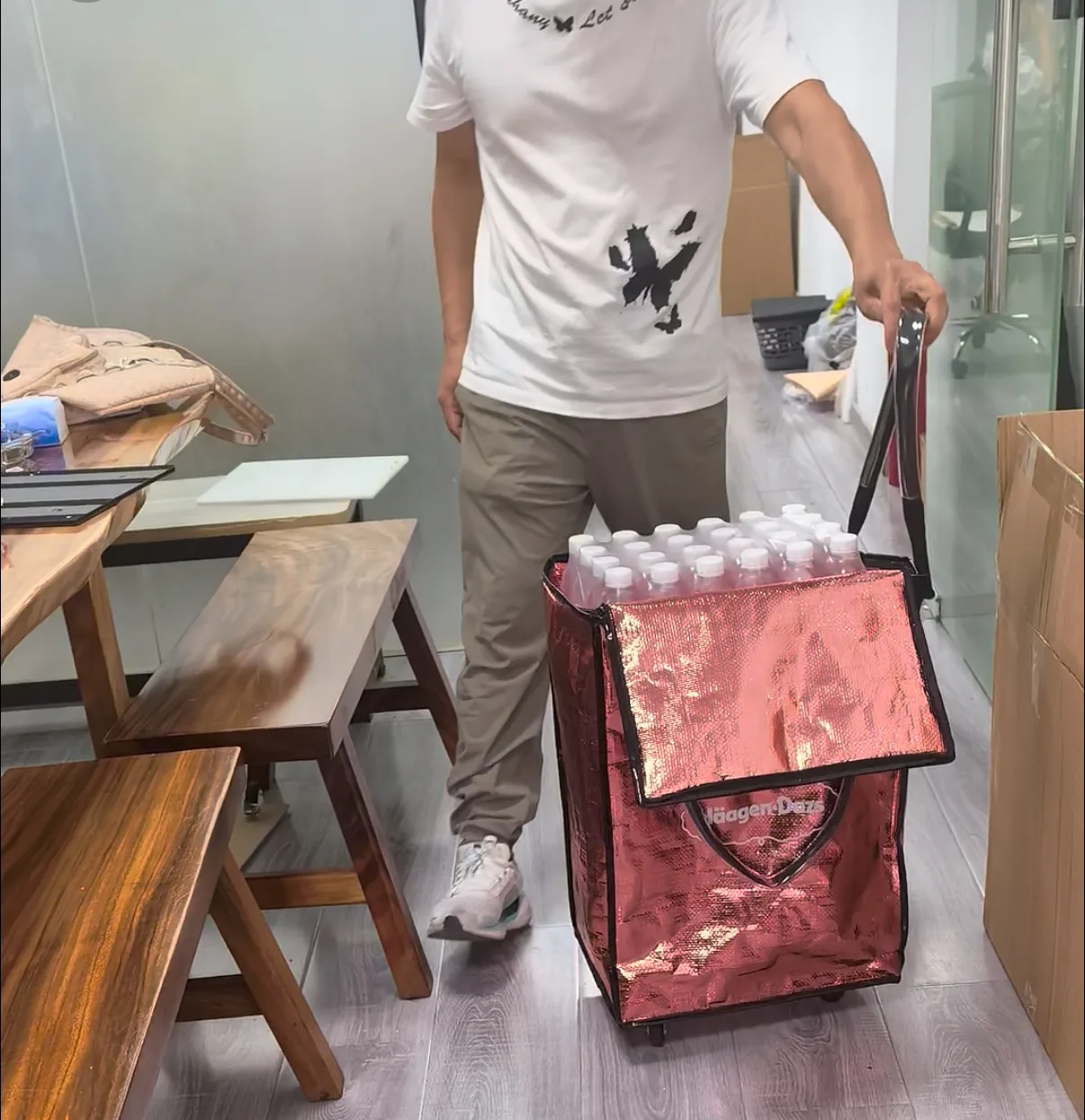
Three cases of bottled water provided a recognizable shopping load totaling 28 kg (about 62 lb). The photos show both the stack on the wheeled support panel and water packed inside the bag. That combination helps buyers judge two different questions: does the base support the mass, and does the bag body accommodate the goods? Case dimensions and stacking pattern affect both. When you request a comparable sample, send the dimensions, total mass and intended packing orientation of your own goods rather than asking for a generic 'heavy-duty' version.
Separate the demonstrated load from your order specification
The 28 kg (about 62 lb) figure describes this field-test load. Your own order may contain different goods, so ask for a sample check using your expected weight and the way your recipient will load the bag. If you intend to print a maximum capacity on packaging, approve that separate claim using a defined test method rather than treating a single route as a rating.
Keep volume and weight in separate columns
A bag may accept three cases by volume yet place concentrated weight over a narrow part of the support plate. Conversely, a lighter but bulky package can interfere with the closure, the handle path or access to the contents. A useful buyer brief records outer dimensions of each item, packed dimensions, total mass, whether the top must close, whether the goods may protrude, and whether the recipient must remove items without tipping the bag. The indoor Häagen-Dazs photograph shows bottles near or above an open top; it should not be mistaken for proof that the bag closes securely around that particular load.
Understand how the bottom panel carries the load
For this type of wheeled carrier, the bottom panel is a load-transfer component, not merely a surface that keeps goods off the floor. The weight travels from the packed items into the bag bottom, through the plate or support area, then into wheel mounts and the ground. If one case sits off center, its force can also twist the assembly and change how the bag tracks. The owner photographed three water cases positioned on the base before or during loading and reported no visible panel breakage after the field movement. That is a meaningful visual observation, but it does not identify the plate's material, thickness, attachment design or fatigue life.
Define what failure would look like
Before a buyer witnesses a sample test, agree whether the unacceptable outcome is a cracked plate, a loose wheel mount, permanent sag, a bag seam pulling away from the base, a wheel that binds, or a base that rocks on level ground. Each is a different failure mode with a different remedy. A statement that 'the base was fine' is too broad if a later order is disputed. A useful observation record includes clear before-and-after views of the upper and lower faces, mounting points and contact edges. The record should state whether the bag was still loaded or had been emptied when each picture was taken.
Ask whether the load path will stay the same in production
A branded face panel may be identical between two presentations while the hidden base, wheel fastening or bottom reinforcement changes. If a buyer wants the field-test observation to inform bulk approval, ask for the component list and the final preproduction sample to identify the same load-path parts. A component substitution should trigger review, especially at the wheel mount or bottom support. This is a change-control instruction for the project, not a claim that a substitution occurred here. The point is to make a good sample result transferable only when the relevant construction is actually maintained.
Evaluate the wheel assembly as a system
A wheel is not judged by its visible tread alone. Rolling performance depends on the wheel, axle or caster assembly, its mounting point, orientation, clearance from the bag, and whether a load causes the frame to lean. The owner reported smooth rolling through the 28 kg (about 62 lb) trial. The close-up below shows the wheel and mounting area after use, with no obvious breakage visible in that view. For a branded program, this matters because a recipient will notice a dragging or noisy wheel sooner than a well-positioned logo. Ask to inspect the functional assembly on the actual sample proposed for your order.
Inspect the mounting point, not just the tread
A wheel that still spins may nonetheless have a loosened fastener or a distorted mount. During sample review, check for wobble, rubbing against the bag, exposed sharp edges, uneven wheel height and whether both sides sit squarely on level ground. Repeat that check after the loaded route and once more after unloading. A short clip of the wheel moving can be useful, but it should show the actual test unit and stated load. The present evidence is a still photograph and the owner's report, so this guide does not imply that a standardized wheel-motion recording exists.
Choose surfaces that resemble the recipient route
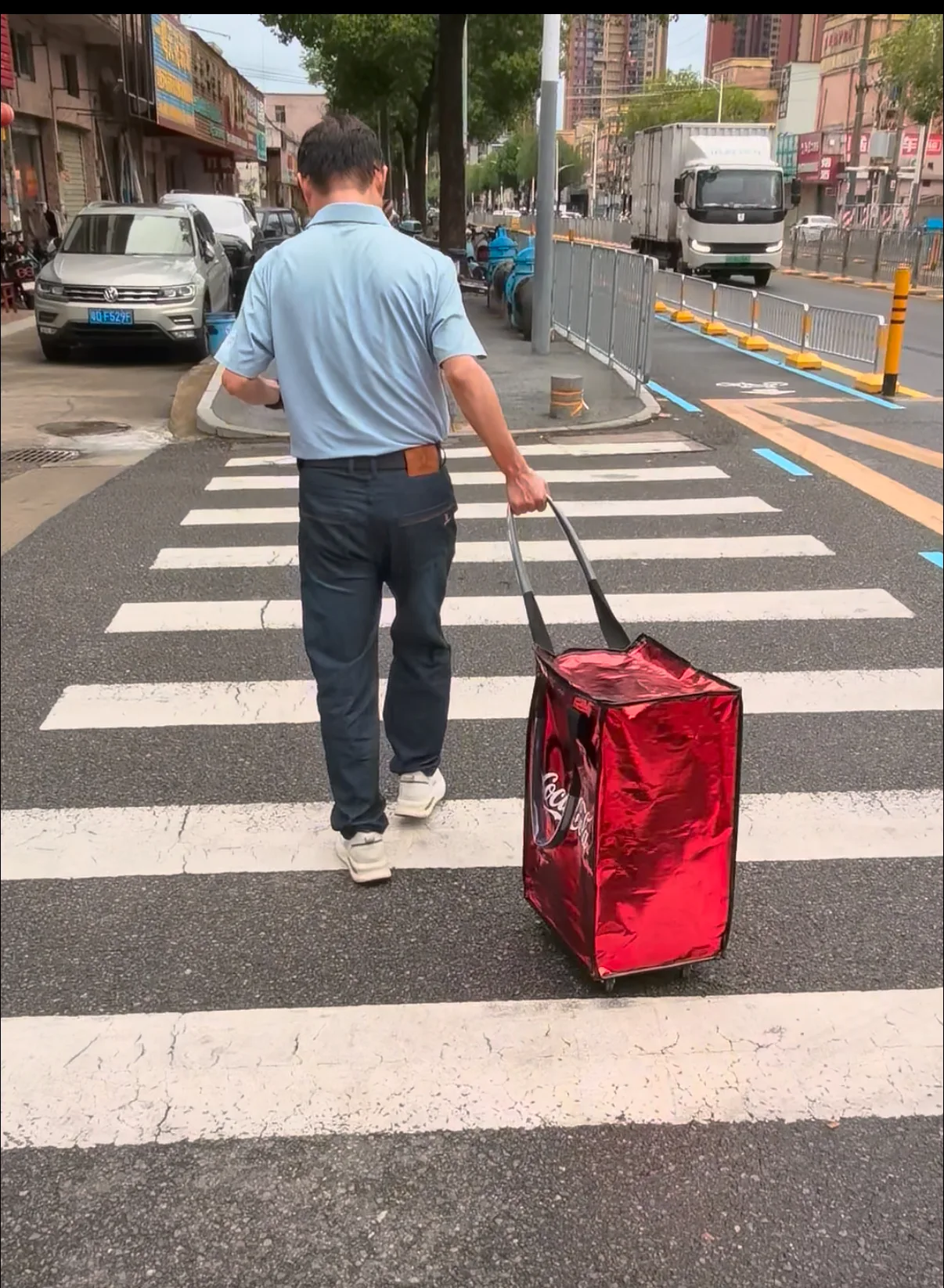
A smooth showroom floor is helpful for checking initial alignment, not enough for a bag that will cross paving joints or rough outdoor ground. The pictured route includes paved areas and a rougher section described by the owner. For a repeat project, list expected surfaces and transitions: indoor tile, asphalt, tactile paving, a shallow threshold or the slope into a vehicle, if applicable. Do not invent a severe terrain test if the end user will never encounter it; equally, do not approve only on tile when the campaign promises everyday shopping use. The path should correspond to the brand's actual distribution and use scenario.
Look for rolling stability, not a vague 'smooth' claim
The owner reported that the loaded bag rolled smoothly. For a buyer, stability means more than whether a wheel spins: the base should follow the pull direction, the bag should not lean markedly to one side in an ordinary turn, and it should stop without a surprising swing toward the user's feet. Those are practical checks to repeat with your chosen contents and route. A short witnessed run of the approved sample can make the word 'smooth' useful to both procurement and marketing teams.
Test straight travel and a controlled turn
A practical field note can separate straight-line travel, a gentle change in direction and an intentional stop. Keep the load arranged the same way for each segment. Note whether a wheel shudders, catches or lifts; whether the bag body swings independently from the base; and whether the operator needs to raise a handle to keep moving. Use the same operator or record when operators change, because a difference in pull angle can change the result. None of these details were logged numerically in the supplied images, so the current conclusion remains the owner's qualitative report of smooth movement.
Watch the handle-to-base relationship
A shopping bag can be comfortable while empty and awkward when loaded if the handle stretches, twists or pulls the upper body away from the rolling base. In a sample review, observe hand position, the bag's distance from the user's legs and whether a full bag blocks a comfortable pulling angle. Ask whether the recipient is expected to lift the loaded unit over a curb; that action may transfer the entire mass to the handle and seams rather than the wheels. The photographs do not establish a handle-lift rating, so the article does not state one.
Describe the route honestly: paved and rougher sections
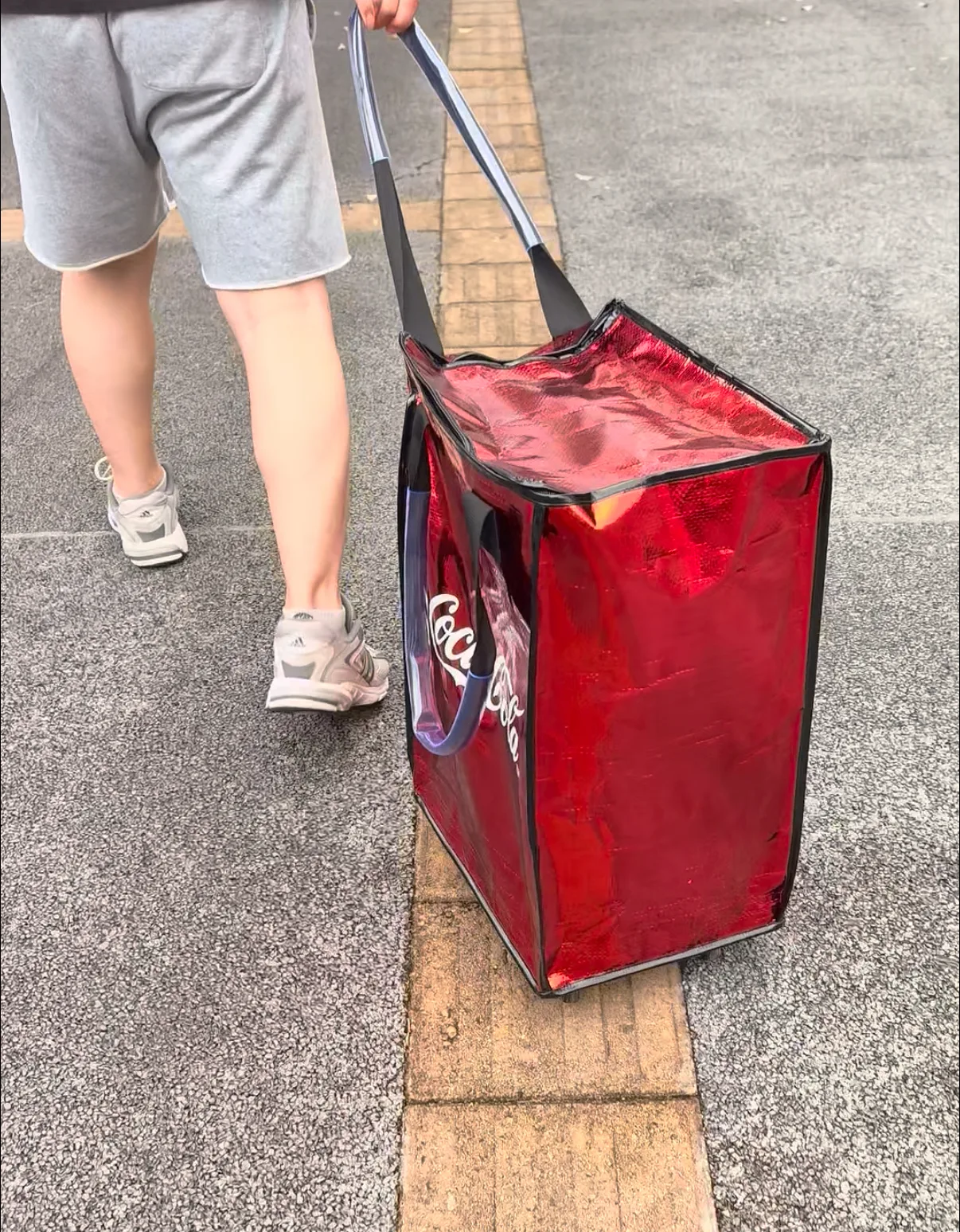
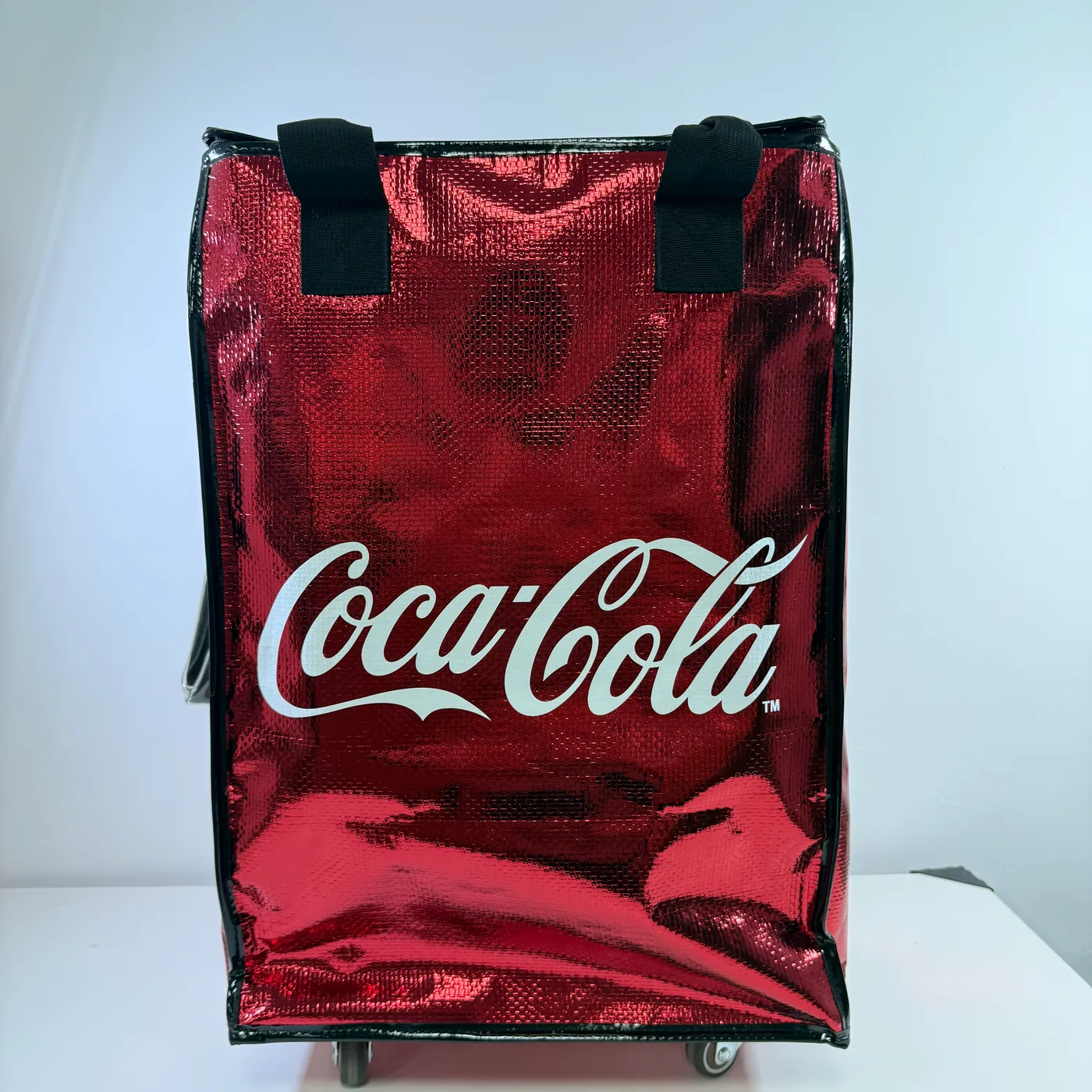
The Coca-Cola sample was photographed on ordinary outdoor pavement and a rougher ground section; the owner also reported indoor movement. The bag remained rollable after this mixed-surface route. For a retail or gifting program, the useful question is whether those surfaces resemble the route your recipients will actually take. A bag intended for a shopping mall floor, a parking lot or a paved event venue faces different transitions. Identify the expected path in your brief and ask to see the approved sample moved over it. This field trip is a practical route demonstration, not an all-terrain or curb-drop claim.
Separate surface texture from an obstacle impact
Rolling on uneven pavement and dropping a loaded bag from a curb are different stresses. Surface texture challenges tread contact, noise and tracking over time. An abrupt step or impact can concentrate force at the wheel housing and plate edge. Since the supplied material does not document a controlled drop or step-height measurement, no impact claim is made. If a retail program expects customers to cross curbs or transit steps, write down the specific route and ask for a separate demonstration. A buyer should not let a photo on rough ground silently answer a different engineering question.
Record the transition points, not just the destination
Most practical failures occur when a rolling object changes surface or direction: doorway thresholds, pavement seams, a ramp lip or the edge between asphalt and concrete. A repeatable evaluation can log which transitions the sample encountered, whether the operator had to lift the wheels, and whether the bag remained upright after stopping. Even a short phone video can help if it identifies the sample, load and route. The present case lacks that measured record; the recommendation is an improvement for future validation, not a retrospective description of work already performed.
What the post-test wheel check means for buyers
The close-up shown earlier lets a buyer inspect the wheel and attachment area after the loaded route. The owner reported that the wheel continued to move smoothly, and the visible component was not broken in the supplied view. That is a useful sample outcome. For a larger rollout, ask to see the same wheel before and after your agreed route, with the unit identified, so your team can judge both appearance and function. If your packaging will promise a quantified wear life, commission a separate repeatable wear test for that claim.
Create a before-and-after pair for future approvals
Photograph each wheel from the same distance and angle before loading, after indoor movement and after the outdoor route. Include a frame showing the sample as a whole so close-ups are not detached from the test unit. If a buyer needs quantified wear, agree a measurement method and have an appropriate party record it. Otherwise, write 'visual condition' and describe what can actually be seen. That simple vocabulary prevents a sales deck from turning a useful photo into an unsupported abrasion-resistance number.
Check function after unloading as well
A wheel can behave one way under a concentrated load and another after the bag is emptied. Test whether it still turns without binding, whether the housing has shifted and whether the bag sits as intended when placed on a level surface. If anything changed, note when it first appeared rather than retouching the photo or ignoring a weak result. This article uses the supplied evidence without editing the original scene. Future review should preserve the original image files and identify any resized website copies as presentation derivatives, so the buyer can examine the unaltered evidence when needed.
Keep the Coca-Cola and Häagen-Dazs variants distinct
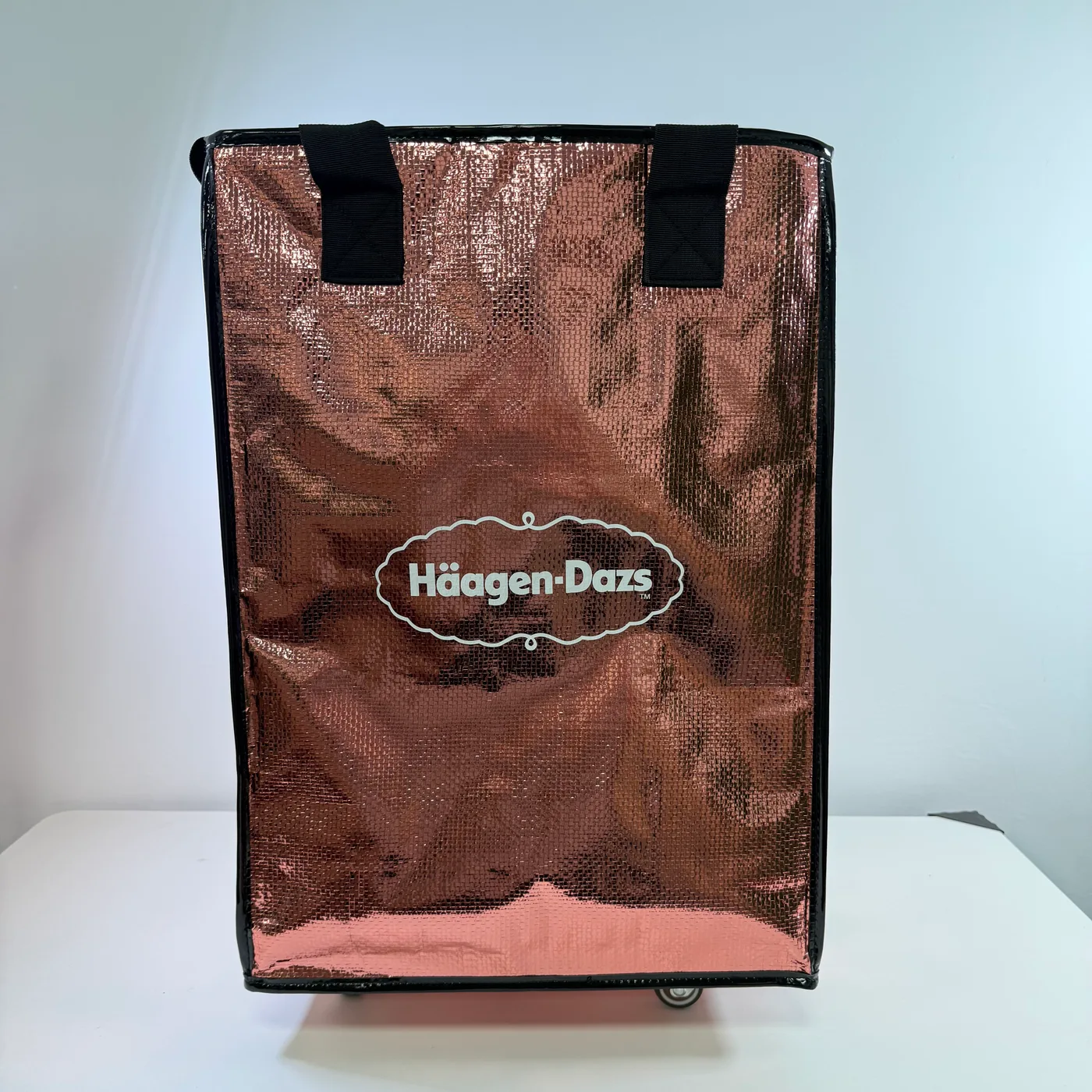
The owner identifies Coca-Cola and Häagen-Dazs as two brand presentations of the same bag design. The supplied photographs show the Häagen-Dazs version indoors with water and the Coca-Cola version outdoors. This lets buyers compare how one form factor carries different graphics while keeping the visible trial evidence correctly attributed. If your campaign needs two logos or regional artworks, approve each physical version and label the samples separately. The brands in these photos identify the examples only; your own project needs its own approved artwork and usage rights.
Use the correct evidence for each version
A buyer comparing two graphics on one structure should create a sample ID for each variant and a component revision for any shared base. Put the brand artwork file and the physical component reference beside that ID. If a photograph shows only the Coca-Cola sample on outdoor pavement, its caption should say so. If a test was repeated on the Häagen-Dazs version, attach its own route evidence rather than borrowing the first photograph. This keeps marketing claims and technical evidence aligned without erasing the useful fact that one design can carry different visual identities.
Keep brand use and customer identity precise
The owner says permission was granted to write about these branded examples. We do not infer the legal scope of that permission, the exact contracting customer, the campaign size or any endorsement by the brand owners. The article does not publish an order volume, sales result, price or distribution country. If a future case study names a client relationship, marketing outcome or exclusive manufacturing role, secure the relevant written approval and supporting records first. This is especially important on a B2B website where a procurement team may rely on a case study as due-diligence evidence.
Translate the test into a buyer acceptance plan
The useful next step is to turn the 28 kg (about 62 lb) demonstration into a sample acceptance plan for your recipients. State what they will carry, how they will pack it, the route they will use and what the wheel and base must look like after movement. Decide which sample version your team will approve. The actual photographs in this case provide a visual starting point; your order should be checked against its own intended contents and route rather than inheriting a different project's assumptions.
Set pass and fail conditions before moving the sample
For this construction, a draft checklist might ask that the base has no visible crack, wheels remain attached and free-turning, the bag still tracks in a straight pull, seams around the base remain intact, the packed items remain contained as intended and the brand mark remains presentable. These are proposed buyer criteria, not results already measured in the owner trial. Each item should be adapted to the actual design and buyer risk. Put ambiguous words such as 'good' or 'stable' behind an observable action or photograph, and record who has authority to approve an exception.
Control the order of observations
Photograph the empty sample and its wheel mount, load the specified items, record the initial condition, move over the agreed route, stop and observe while still loaded, then empty the bag and inspect the base and wheel again. Record any change in the sample's revision, the operator or the route. If a sample fails, save the evidence and determine whether the cause was the bag, the load arrangement or a test action outside intended use. The goal is a decision a buyer can revisit later, not a video designed only to look impressive in a sales meeting.
Keep branding decisions separate from mechanical decisions
A promotional wheeled shopping bag must satisfy two independent approvals. Mechanical review concerns the loaded bag, wheel assembly, base support and expected route. Brand review concerns logo rights, file version, placement, contrast, color, readability when the bag is full and the appearance after handling. A successful load observation does not approve the artwork, and a polished visual mock-up does not approve the base. Keeping these records separate lets a marketer and a procurement lead discuss the same project without one approval silently standing in for the other.
Review the mark in the real use position
A logo may look centered on an empty flat bag but shift visually when three bulky cases press the front panel outward. Ask to see the proposed artwork on the physical sample both empty and loaded with representative contents. Confirm which side faces the recipient or public during pulling, whether folds obscure small lettering, and whether the bag's handle hides a key part of the mark. The supplied photographs show branded presentation; they do not define a universal print area or decoration method. Those details must be confirmed against the chosen material and construction for each project.
Record licensed artwork and variant ownership
For a program using recognizable brand marks, the buyer should provide approved artwork, brand-color references and written instructions on permitted use. Assign an owner for the final proof and specify whether two brand variants require separate approvals and carton labels. The website photograph is evidence of a pictured sample under the owner's stated article authorization, not a reusable artwork license for another buyer. If a supplier proposes a new print method or material, review the physical appearance again; do not assume that a digital mock-up or a previous variant approval covers the change.
Use the sample to reduce a procurement dispute
A B2B buyer cares about what will happen if the bulk order looks right but rolls differently from the approved sample. The answer starts before placing the order: identify the controlled reference unit and the components that affect function. Record the wheel style, mounting arrangement, base shape, bag dimensions, handle construction, artwork version and any buyer-approved exceptions. The record need not pretend to be an engineering drawing if none exists, but it must be specific enough that a replacement wheel or support plate is recognizable as a change. The branded-bag sample guide explains how to consolidate revision feedback across decision owners.
Ask for the proposed production route, not a borrowed certificate
SmartPro Gifts is the project contact and multi-category bag supplier represented by this website. The parent company Hongzhao has its own outdoor-focused site and its own dated manufacturing documents. This wheeled shopping bag case does not prove which legal entity made a future order or that SmartPro itself holds the parent's certificates. If a buyer needs manufacturing-site evidence, ask SmartPro to identify the actual proposed route. Where relevant, the parent's facility information and certification documents can be reviewed under the parent's name. Neither set of pages should be used to invent certification for this specific bag.
Make changes visible between sample and bulk
Any change to wheel size, fastening, bottom panel, bag bottom reinforcement, handle or load-bearing seam can alter the result even if the exterior artwork looks identical. Ask the project contact to flag those changes and obtain a new representative sample where the risk warrants it. Similarly, a change in case dimensions or the expected recipient route may call for a repeat trial. This is a request for change control, not an allegation that a component was changed during the photographed trial. It is the bridge between an encouraging one-off test and a repeatable commercial specification.
Write an RFQ that vendors can answer without guessing
An effective inquiry for this kind of branded shopping bag identifies the user and scenario before asking for a unit price. Include the intended contents and their packed dimensions, expected total load, movement surfaces, whether the bag must close over the load, the desired base and wheel reference, approved brand files, quantity by design and color, individual packaging, destination and required arrival date. Mark unknown items as unknown. If a retailer or agency will distribute the bags, say who receives, labels and inspects cartons. Without a controlled brief, two suppliers may quote different wheel assemblies or packing scopes while appearing to answer the same request.
Ask for explicit inclusions and exclusions
Request a quote that separates the bag, the wheeled base, branding, physical sample, individual packing, outer carton, transport and any testing requested by the buyer. State whether the quoted price assumes buyer-supplied licensed artwork and whether assembly of third-party promotional contents is included. A low unit price may exclude the feature that made the sample compelling. The branded-bag procurement timeline can help the team place approvals and shipping in sequence, but it does not replace the wheeled bag's component-level description.
Do not borrow another product's MOQ or lead time
SmartPro's site publishes conditional starting points for selected bag projects, not a guaranteed minimum order or production schedule for every wheeled design. A different wheel set, base construction, licensed-brand approval, packaging or color split can change feasibility. Ask for the exact minimum quantity by version, sample scope, production milestone and transport assumption for the proposed construction. This case article deliberately gives no invented unit price, print dimension, project MOQ or delivery promise. If a buyer needs those commercial numbers, the answer belongs in a dated quotation tied to the approved specification.
Plan bulk checks around the wheel and the branded unit
A bulk run should match the approved physical sample, not just the artwork proof. At receiving or an agreed production checkpoint, examine wheel attachment, free rotation, base seating, the connection between bag and base, handle condition and the branded appearance. Specify a sample count and acceptance rule for your order before inspection. This field-test article shows how one sample behaved under a real load; the approved reference and your inspection plan are what carry that learning into production.
Make checks practical for the destination team
A warehouse or agency can verify carton marks and version count, then examine a defined set of units for visible mounting damage, free wheel movement, body alignment and approved artwork. They should record the unit and carton identifiers when reporting a defect. A load demonstration is more involved and must be planned rather than casually imposed on every bag. Decide who holds the test load, who witnesses the result and what happens to a tested unit afterward. An elegant checklist is useless if the receiving team cannot carry it out before the campaign deadline.
Protect the scope of any public performance claim
If marketing wants to describe the bag as durable, suitable for groceries or easy to roll, make sure the claim reflects the confirmed production version and intended use. A stronger statement such as a precise carrying capacity or proven all-terrain durability needs stronger evidence. Do not transfer a qualitative sample observation into packaging copy without review. The photographs belong to a real owner-supplied test, and that honesty is more valuable than an exaggerated adjective. It gives an enterprise buyer a clear path to request the additional evidence its own policy requires.
Choose the right follow-up test for your order
This case gives you three practical reference points: three water cases totaling 28 kg (about 62 lb), a route with indoor, paved and rougher outdoor sections, and a post-route check in which the owner observed smooth rolling and no visible bottom-panel damage. If your campaign uses a similar bag, those observations help you brief a supplier. If your recipients will carry different goods or use a different route, test that exact scenario on the approved sample. A high-volume retail program may also need its own repeated-use or load-rating protocol before it prints a performance claim. The table at the top shows which decisions can be made from this case and which should be tailored to your order.
Match the check to the commercial risk
For an internal giveaway used mostly on level floors, reviewing a loaded sample and the wheel after a short route may address the immediate buying question. A retail item advertised with a specific capacity needs a more formal agreed method and a production consistency plan. Choose the evidence level based on the promise you intend to make, the route your customers face and the cost of a failure—not on a generic checklist.
Ask for a useful approval sequence
Confirm the bag construction and wheel/base version first. Then test the packed sample with your contents on the expected route and photograph the same wheel and panel before and after. Agree who signs off the functional result and who signs off the branded appearance. Finally, tie the approved sample to the bulk specification. This sequence gives a marketing team and a buyer one clear reference instead of two incompatible approvals.
Use the case to make the next buying decision
This 28 kg (about 62 lb) water-case trial shows a real loaded wheeled bag in use, with smooth rolling reported after movement and no visible breakage of the bottom panel. It gives a buyer a better starting point than an empty product shot or a vague durability adjective. The next commercial decision is specific: tell SmartPro what your customers will carry, where they will roll the bag, how the branded version should look and which physical sample your team will accept before production. That way a price quotation is tied to the function you actually need.
Copy this project brief
Recipient and handout channel: ______. Intended contents and dimensions: ______. Expected packed mass and how it was measured: ______. Normal movement route and any threshold: ______. Carry, pull and storage actions: ______. Required wheel and base reference: ______. Physical sample ID and revision: ______. Approved artwork and rights owner: ______. Quantity by brand, color and version: ______. Packing and destination: ______. Required usable-by date: ______. Observable pass/fail criteria: ______. Evidence reviewer and final approval owner: ______. Blank fields are questions to resolve, not invitations to guess. Attach the unedited photographs, current artwork and contents reference when requesting a comparable quote.
What to ask SmartPro next
Ask which wheeled-bag construction can be proposed for your route and whether the actual sample can be reviewed under your intended load. Request written confirmation of wheel and bottom-panel components, bag dimensions, artwork method, variant handling, packing and commercial terms. If the illustrated Coca-Cola or Häagen-Dazs design is merely a reference rather than an available orderable specification, ask what would differ and test that version. Send your project requirements with the use case and open questions. An honest conditional answer is safer than an instant universal load promise.
Choose a related buying route
This page documents one sample field test, not a stock offer or a universal load rating. Review the custom wheeled shopping bag product page to brief your own project. Compare custom tote bags if a wheelless hand-carried gift is enough, and use the sample-approval guide to control revisions.